Including ‘The Rule of Twelfths’.
see here!

Including ‘The Rule of Twelfths’.
see here!
Click on image to jump to the full article.
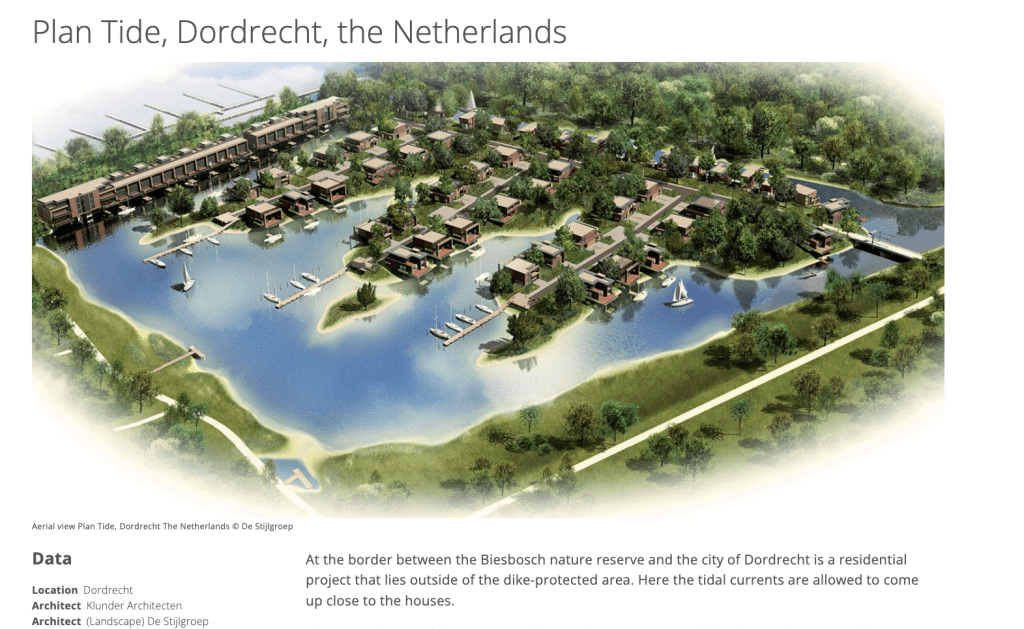
“At the border between the Biesbosch nature reserve and the city of Dordrecht is a residential project that lies outside of the dike-protected area. Here the tidal currents are allowed to come up close to the houses.
The ‘unpoldering’ of the existing polder and its return to a tidal landscape has created the conditions necessary for the formation of new natural areas. A closed soil balance was applied, and the homes are built on pilings. The area is designed in such a way as to provide water catchment despite the ebb and flow of the tides.”
Click on image to jump to the site for more info.
Polder; Polder Restoration; Unpoldering
“Wetlands and streams in 24 states will be threatened if no action is taken.
Restore America’s Estuaries (RAE) is raising urgent concerns about a new rule proposed by the U.S. Environmental Protection Agency (EPA) that would significantly roll back federal protections for wetlands and streams across the country. The proposal follows the 2023 Supreme Court decision in Sackett v. EPA, which overturned decades of established precedent under the Clean Water Act and sharply limited the scope of Waters of the United States (WOTUS).
In compliance with the Sackett decision, EPA has released a proposed rule that narrows federal oversight by removing protections for intermittent streams and wetlands connected through subsurface groundwater. These waters represent some of the most ecologically important freshwater sources feeding America’s estuaries, supporting water quality and natural flood defenses.
Currently, 24 out of 50 states rely on federal WOTUS protections for clean water enforcement of wetlands and streams. If this proposed rule becomes finalized, close to 80% of wetlands and over 5 million miles of streams would lose their protected status. Because most watersheds cross multiple state boundaries, this fragmented approach would create inconsistencies, weaken enforcement, and push environmental protections toward the lowest standards within the watershed. Federal policy must play a critical role in ensuring that states don’t export their pollution problems onto other states. History has shown the human and ecological costs savings of prevention are much greater than the costs of remediation.
“Eliminating safeguards for these critical waters puts our communities, coastlines, and ecosystems at extreme risk,” said Daniel Hayden, President and CEO of Restore America’s Estuaries. “Weakening these protections jeopardizes our drinking water quality, billions of dollars in coastal industries such as fisheries, boating, and shipping, as well as endangers critical infrastructure with increased upstream pollution.”
RAE urges federal leaders to reconsider the proposed rule and for Congress to clarify the legislation by restoring strong, science-based protections for wetlands and streams nationwide.” Source here.
About RAE.
Restore America’s Estuaries is dedicated to the protection and restoration of bays and estuaries as essential resources for our nation.
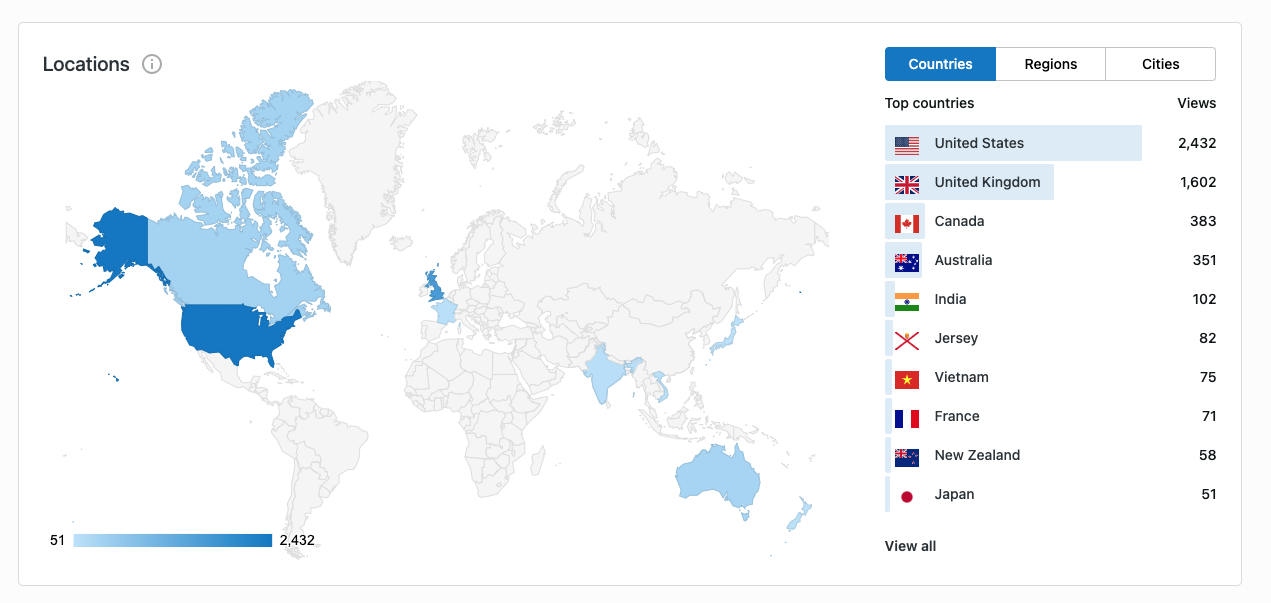
Here are a few snapshots of the WordPress stats for this site. Last seven months.
Thanks to all who have visited from all around the world.



A page on this blog here. It has been seen almost 95,000 times!
Flood Gulls. A term from the great Rachel Carson’s book Under the Sea-Wind ‘Because they fed on the rising tide, the skimmers were called flood gulls. … The flood gulls circled the island and crossed and recrossed’.
Tidal Intrusion. This refers to the extent to which tidal water finds its way upstream in an estuary at high tide. This can refer to the reach of the tidel inland, and also the consequences of that, particulalry degrees of salinity. (Source here).
See the Glossary here
Thanks to all who come and look, and leave commnets. More welcome!

From WordPress by email!

 Tidal Cultures