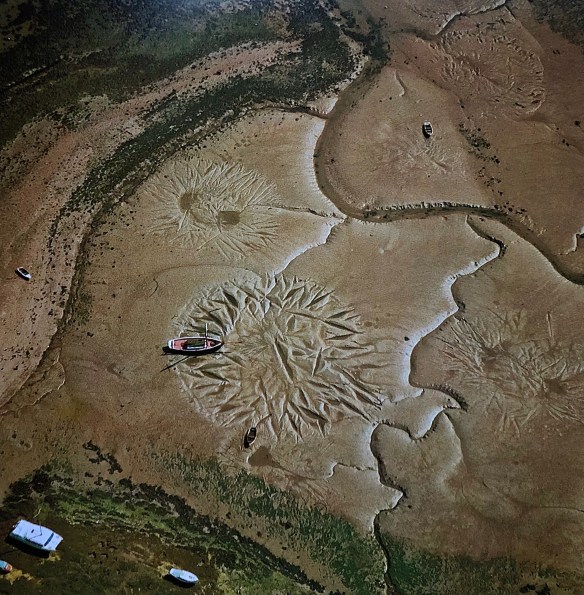
This is great we think – it is from a 1980s book of arial photographs of the British landscape. It seems to be a kind of pattern made in a Welsh (UK) estuary mudflat by a moored boat being repeatedly lifted and grounded on a mudbank by the tide. There seem to be a few of them.
With the artist Heather Green, we have decided to call these ‘tidal spiralgraphs’. Other examples, in Korea, can be seen here on Instagram. (Thanks to Heather for link).
This is in Angle, Dyfed, Wales.
This is the book this is from, by Bernard Stonehouse, published in 1982. Although just about the British Landscape there are a lot of coastal pics of intertidal areas, e.g. the ones below
This is a new term devised by artist-scholar Heather Green and Owain (blog owner), and is the first outcome of their collaborative explortions of the Severn Estuary. Treeces were seen when Heather and Owain got on to the Severn river bed at Arlingham (near Gloucester, UK) at low tide. The moon was rising over the nearby village of Framilode.
Treece – a mark left on intertidal ground by bits of wood and other objects, as they are dragged, and then left stranded, by the last ebbings of a falling tide. (Treece is also an old Anglo-Saxon name associated with trees).
They might be quite rare – depending on particular combinations of conditions of flow, surface and object.
The ones we saw were quite varied, depending on what made them (e.g. a discarded christmas tree, and one was a kinding interweaving pair of lines made by a log that must have been spinning as it can to rest on the sand. (See pics below).
Comment from artist Margarethe Kölmel sent by email on 16.01.2020. Thanks.
“Lovely, a new word! “Treece” – Besides its obvious relation to trace it is what I would call a sound word (surely there is an english term for it that I don’t know) – a word that describes the thing or the activity by the sound it makes when we say it – here the dragging of a thing through\over sand.
No 69. Walking the Tide. A large scale dynamic participatory performance event celebrating coast and community. By Jo Hodges in collaboration with Florencia Garcia Chafuen. Scotland; UK. 2013.
Thanks to Jo Hodges of artist partnership Coleman and Hodges for sending this in to us.
They say .. “The different tides at each Beach School session spark children’s curiosity and interest in unimaginable ways!”
“There is something just so magical about watching the tide come in wave by wave, I love observing the children’s reaction to the great water! For some of them it will be their first experience of open water.”
I am not sure how long this will stay on the BBC IPlayer
A few quotes, written and spoken by Kevin Crossley-Holland
‘Tide watching is compulsive activity’
‘Yes. Tides, they shape our days, they’re the breath and shining, the dark blood-stream of this place. Sometimes gasping, sucking, shuddering, alarming; sometimes rhythmical and calm as a sleeping baby.’
‘There is a paradox, isn’t there? In the way that this place; always in flux, always on the edge, and sometimes subject to wind and water at their most destructive; this place that has sustained livelihoods, and inspired many artists and writers, can also offer a very deep sense of peace’.
Here is the text from the website and full credits
Kevin Crossley-Holland reflects on the magic and the menace of the Norfolk tides.
For centuries, North Norfolk lives have been shaped by the daily rhythm of the tides, creating a sense of wonder, as well as tragedy, with many stranded or lost at sea.
The shimmering creek is at low tide at Burnham Overy Staithe, the North Norfolk coastline a mesh of salt marshes, sand dunes, wild sea lavender and shingle ridges. But the whispering of the wind and the cawing of the gulls are deceptively tranquil. In a matter of hours, the furious gushing of the incoming North Sea tide signals the utter transformation of the staithe – and, in its wake, a new menace arrives. The coastline is in a constant state of flux, always shape shifting, beguiling and menacing.
For local fishermen and sailing enthusiasts, the Tide Tables are ignored at their peril; for others the rhythm of the tides provides solace and comfort. And for a local artist, the tides bring back reminders from the past, from the ancient forests of Doggerland.
With thanks to contributors Matt and Sky Falvey, Andy Frary, Mandy Humphries, Polly Ionides, Daniel Loose, Ashmole Ring, Robert Smith and Pat and Mike Thompson.
Written and narrated by Kevin Crossley-Holland
Produced by Sarah Peters
Recorded and mixed by Peregrine Andrews
Extra wildlife recordings provided by Tony Fulford
A Tuning Fork and Open Audio production for BBC Radio 4
Hmm – not sure what to think of this. They have a tractor and machine to sweep away the high tide wrack line on Weston Super Mare beach. I guess they hope to make the beach ‘clean’ and tourist friendly. But this is the Severn Estuary. And exploring the wrack line is always of interest to many.
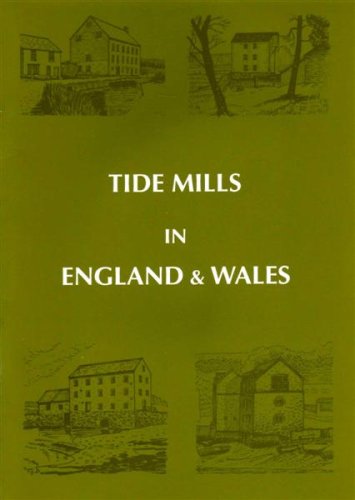
Tide Mills – mills that are driven by water provided by a high tide – are an important artea of Tidal Cultures. They were very early examples of green’ renewable energy as water and wind mills were.
There are a number – but not that many – around the UK coast. They seem to be a way of harvesting tidal power at the local level which is relatively non-intrusive to the environment in comparison with modern (much larger) plans for lagoons and barrages. The ones that do exist are often rather lovely buildings – in lovely locations. There are a number of ‘lost’ tide mills, as far as we can see.
We are tracking down a copy of this 1994 publication.
We have visted a few in the UK.
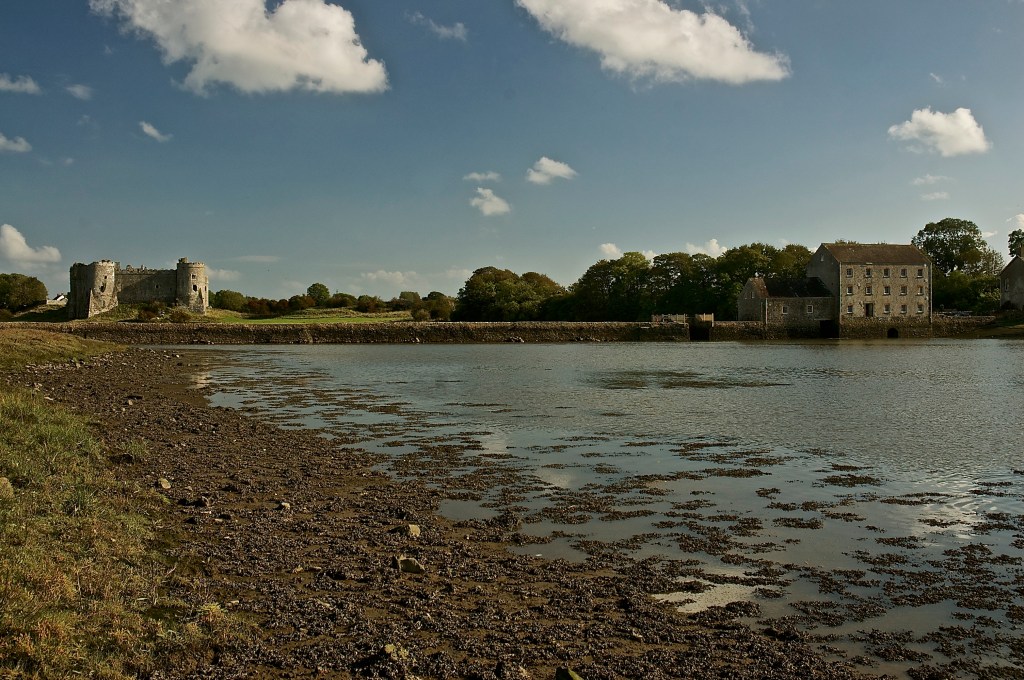
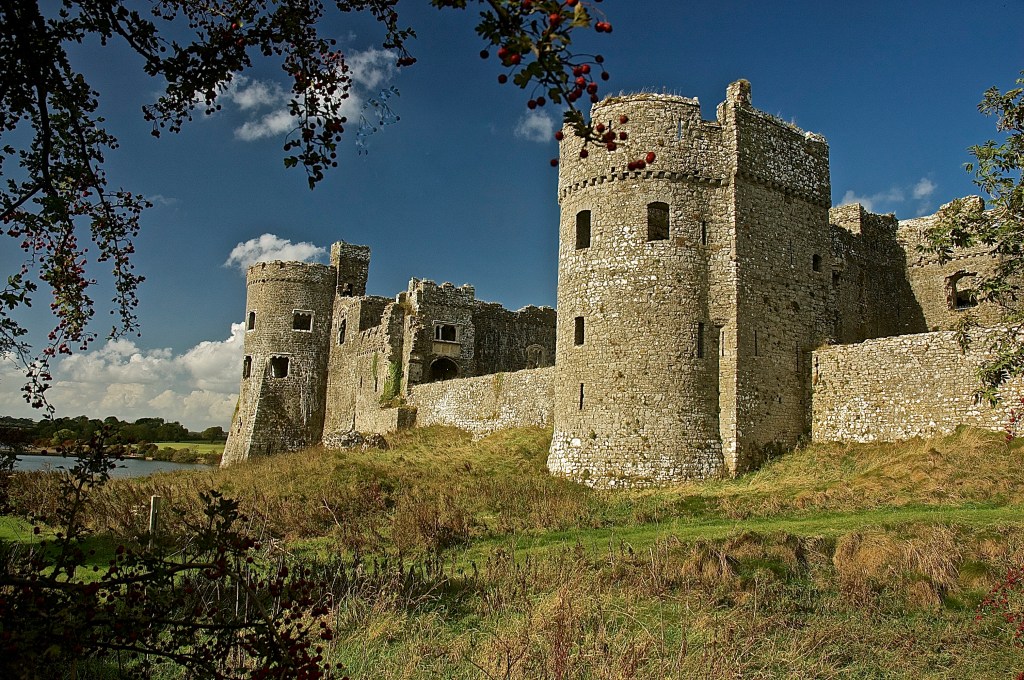
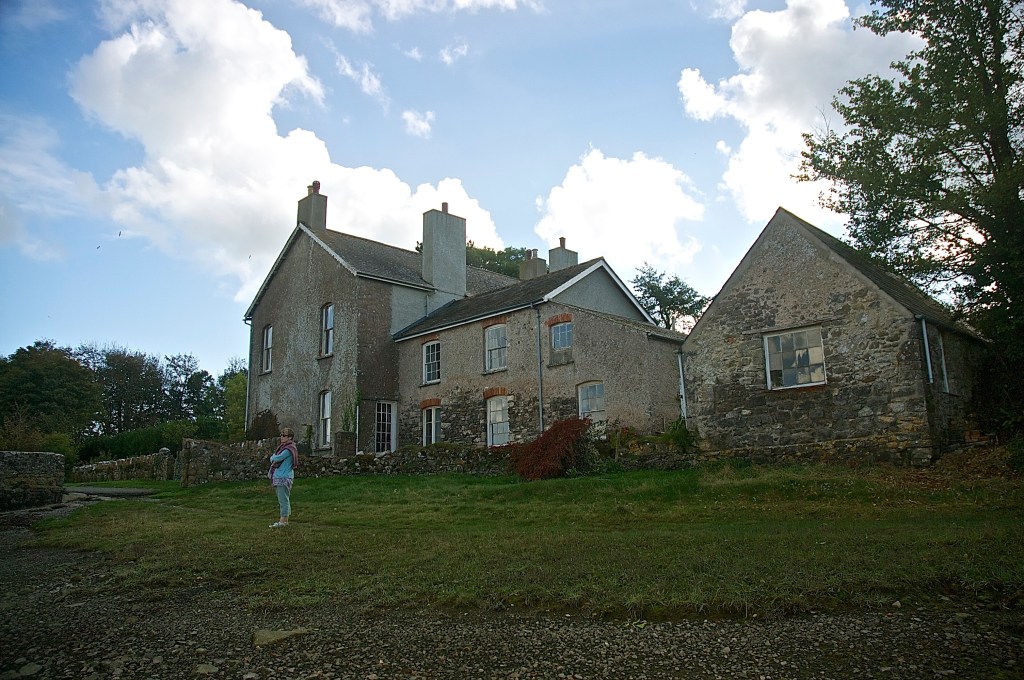
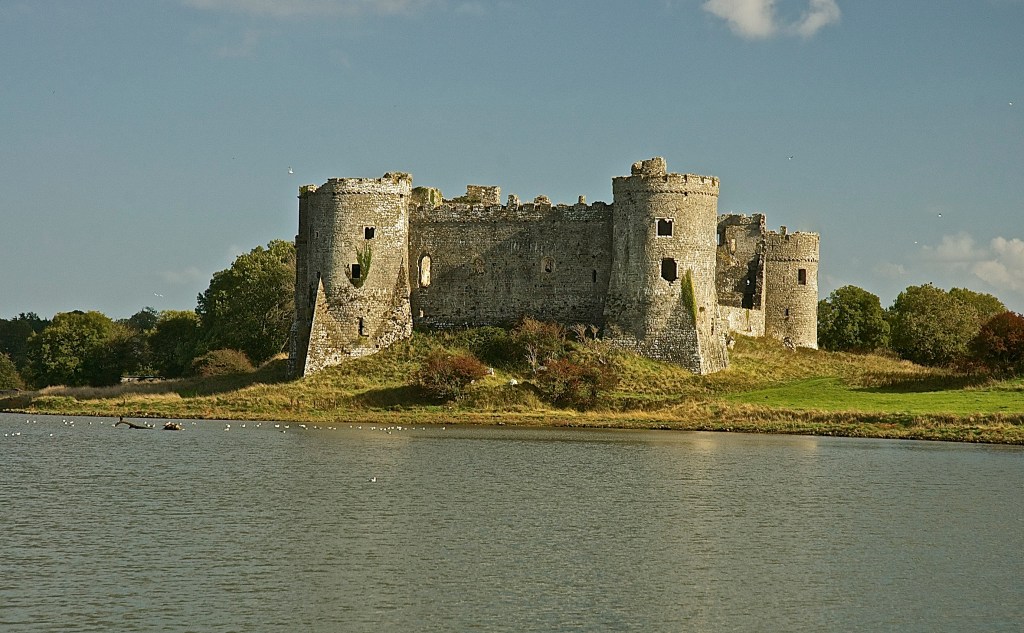
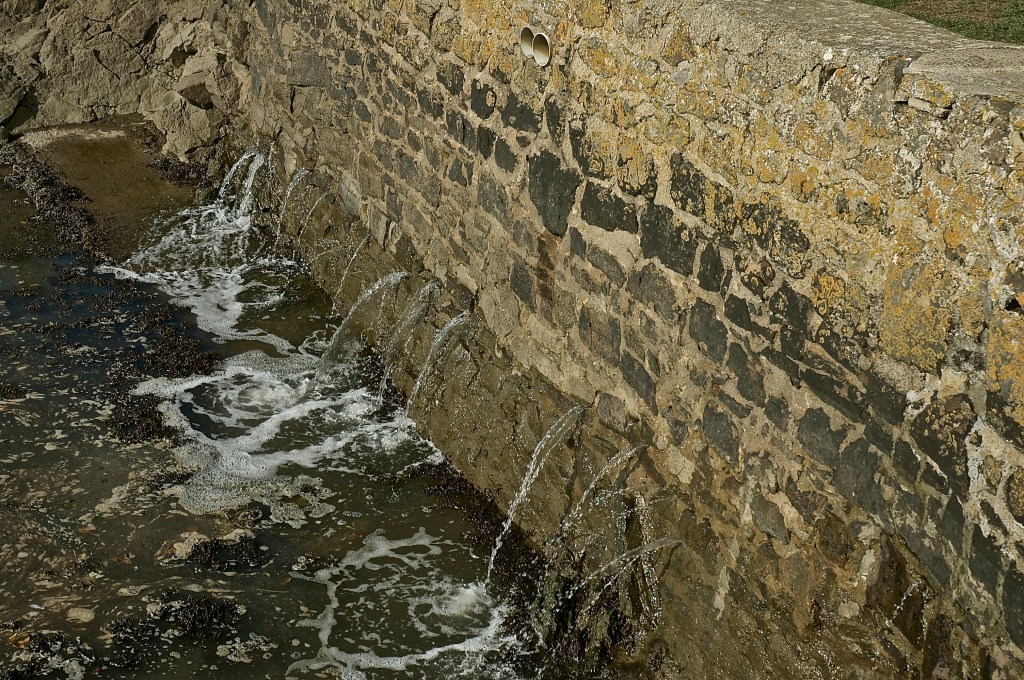
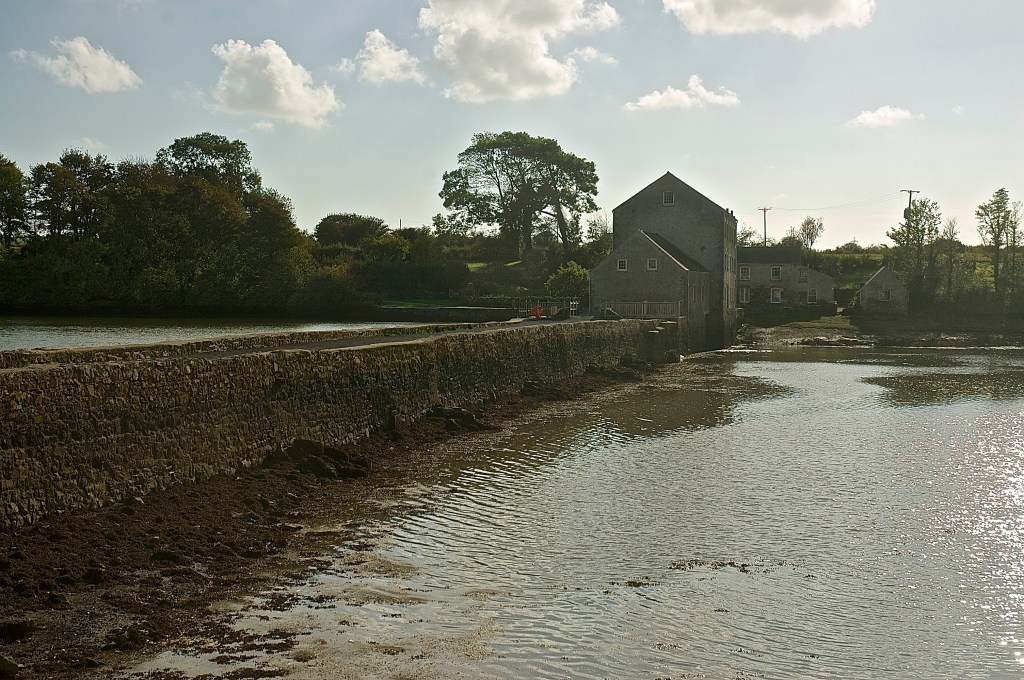
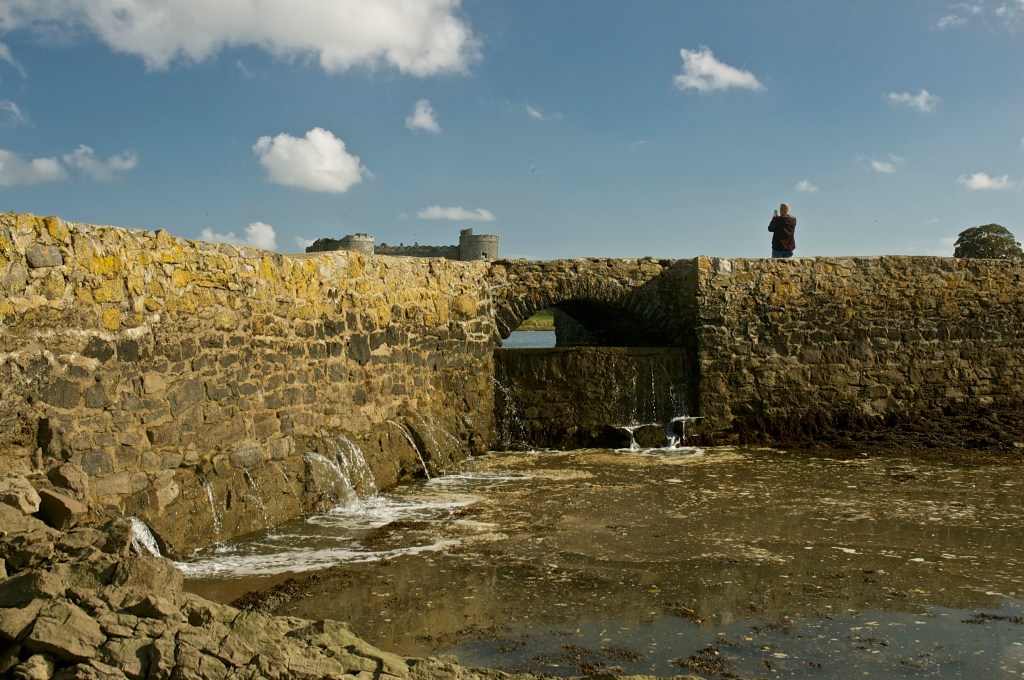
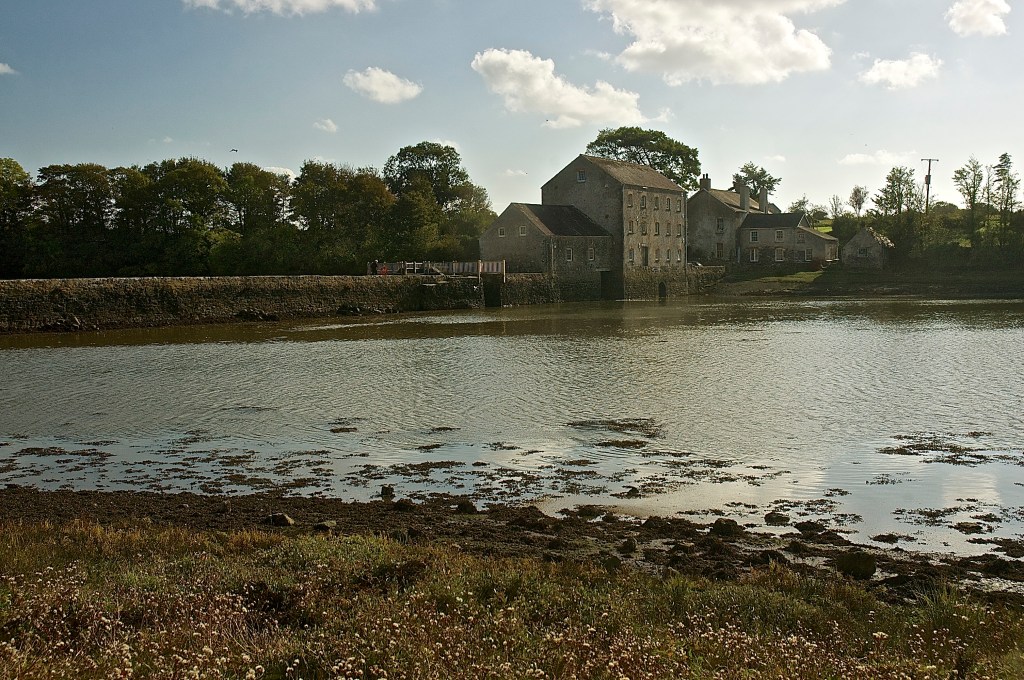
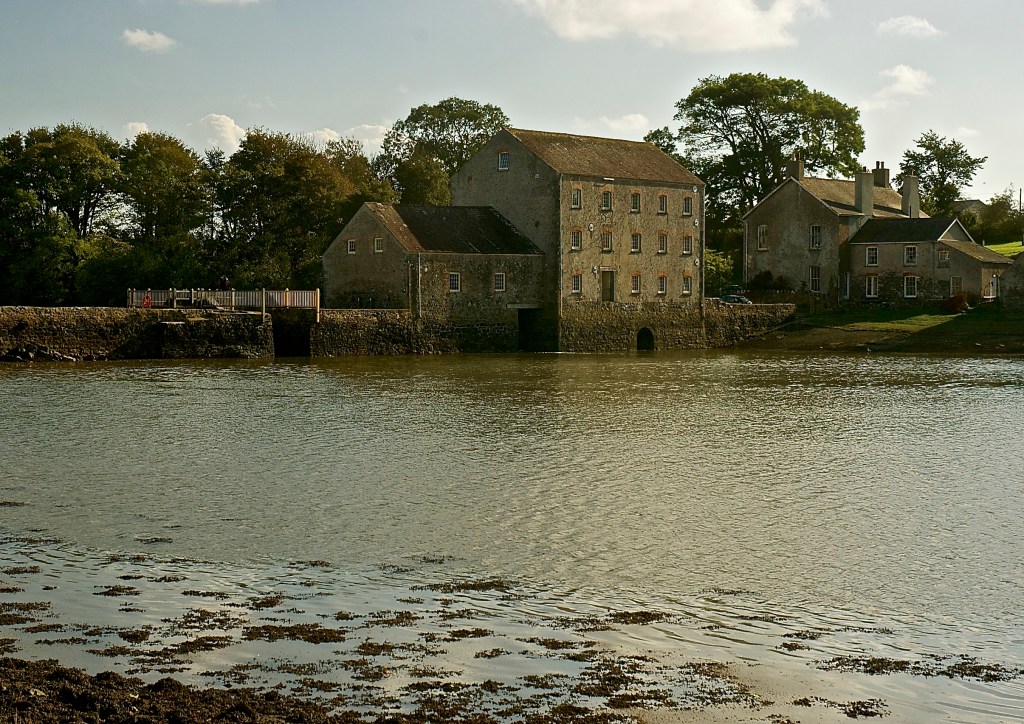
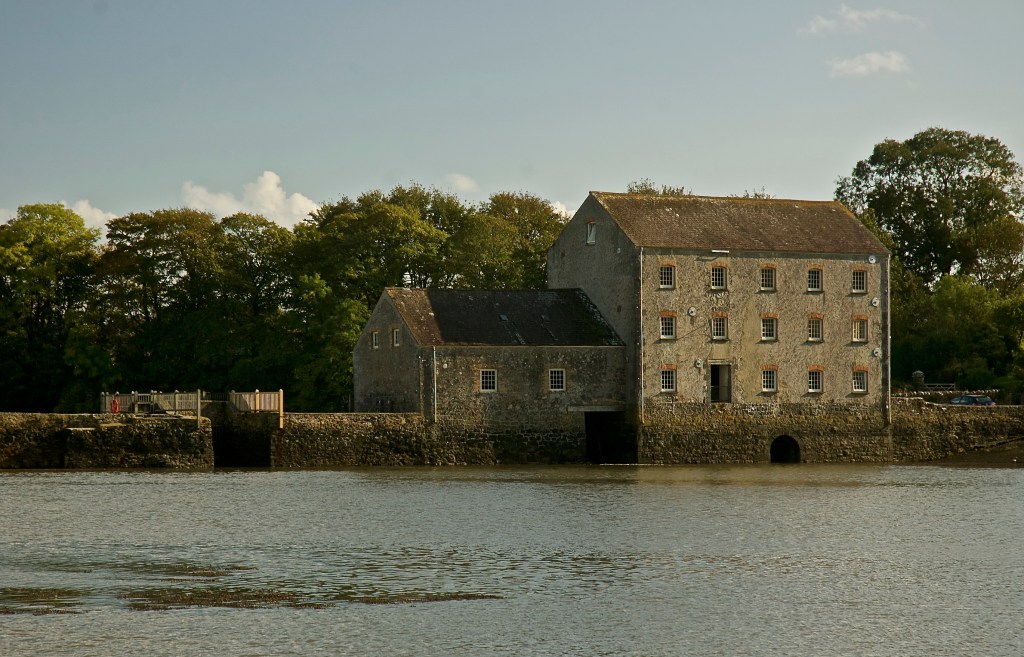
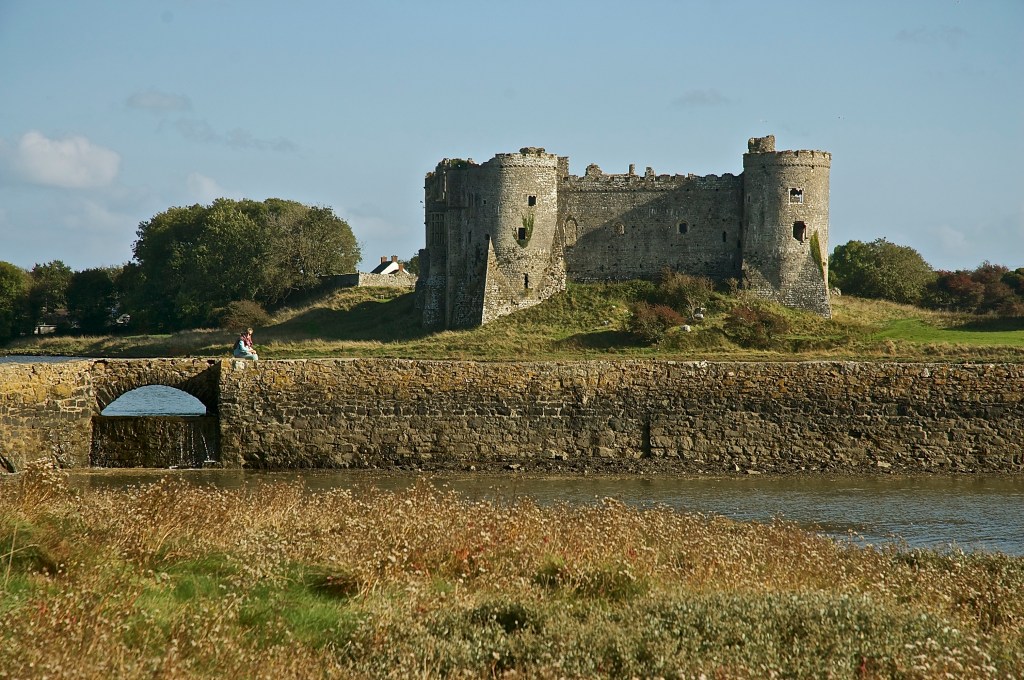
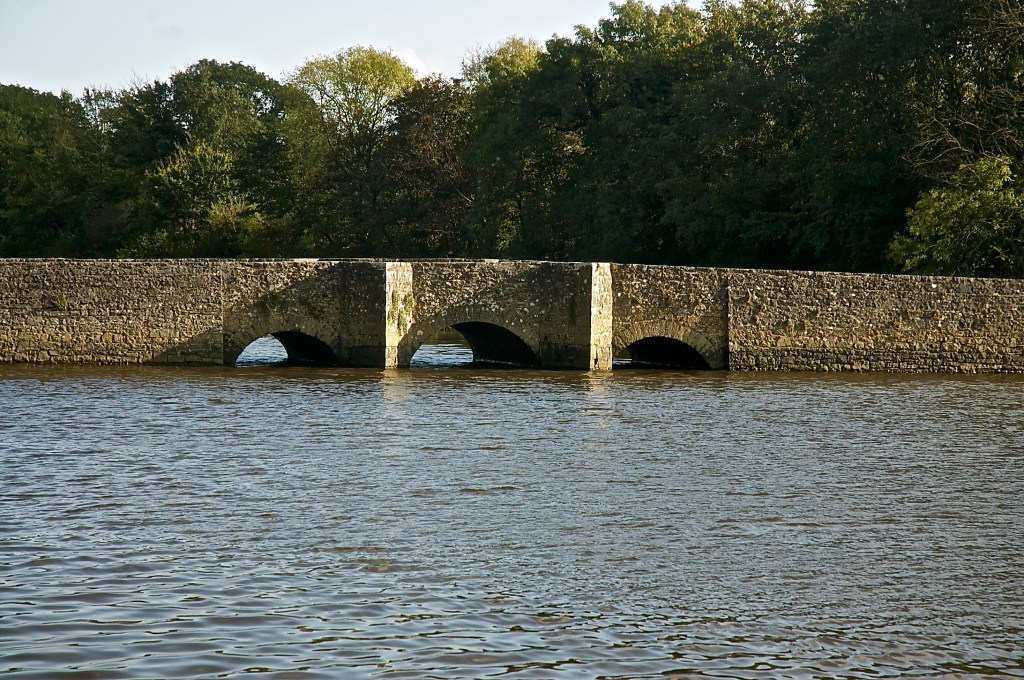
Tide Mill at Carew, Pembrokeshire. This is an amazing place, a lagoon, mill and house linked to the spectacular Carew Castle ruins.
A short stretch of the tidal river Carew was engineered to make a lagoon that fills at high tide so the water could be used to drive the mill after. Much more info here. Here are some pictures.
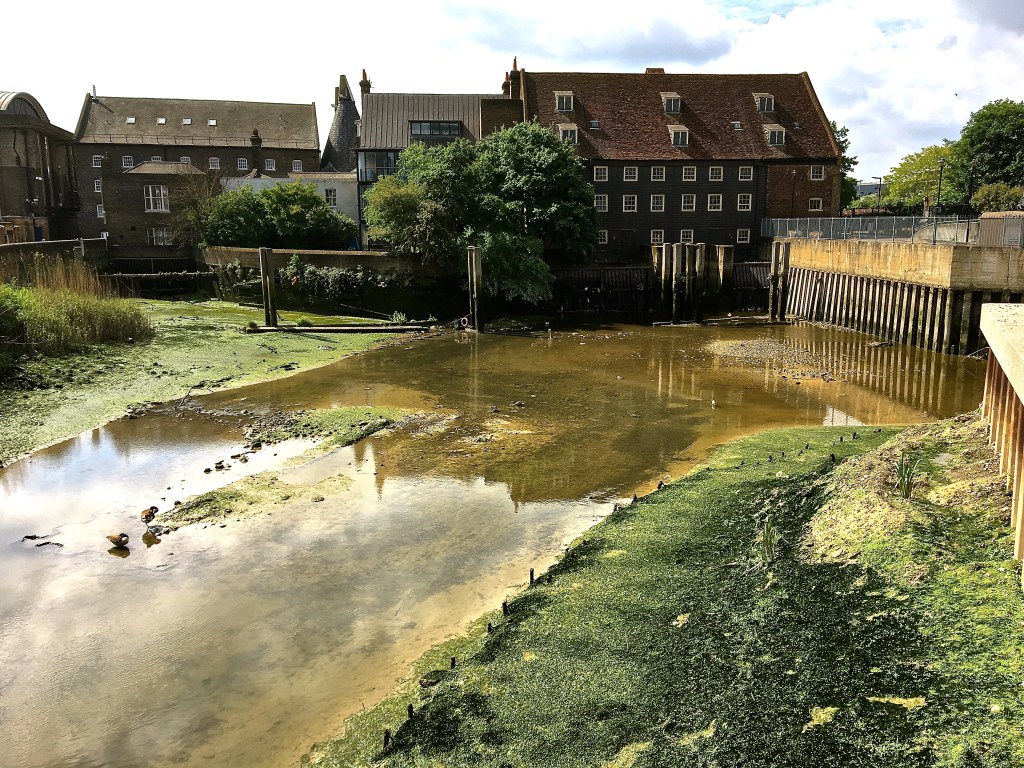
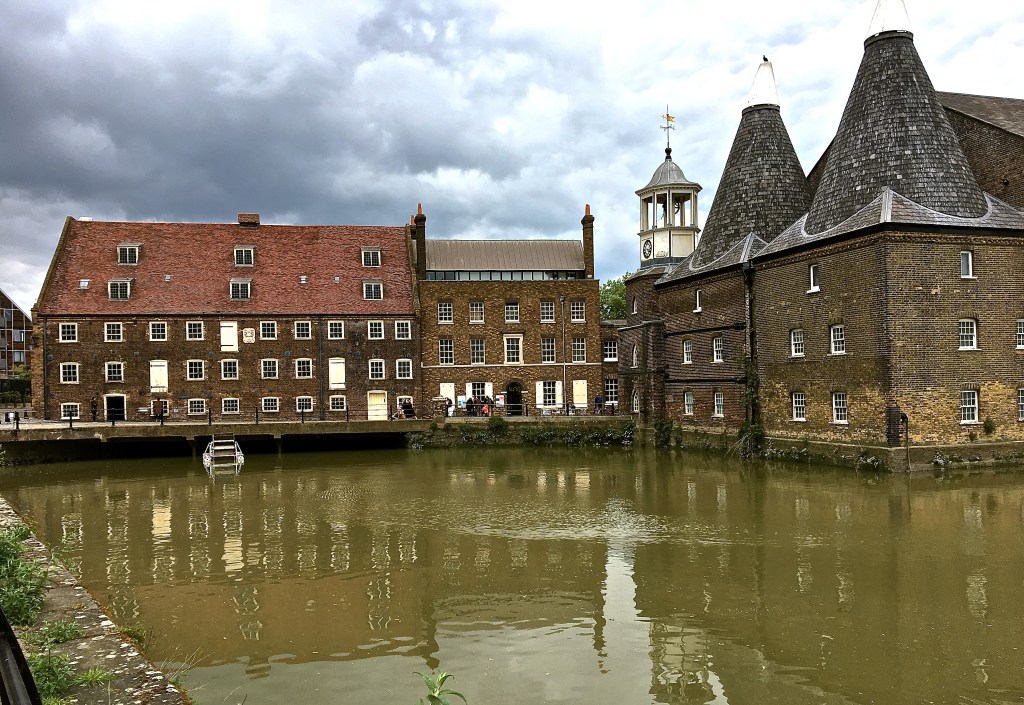
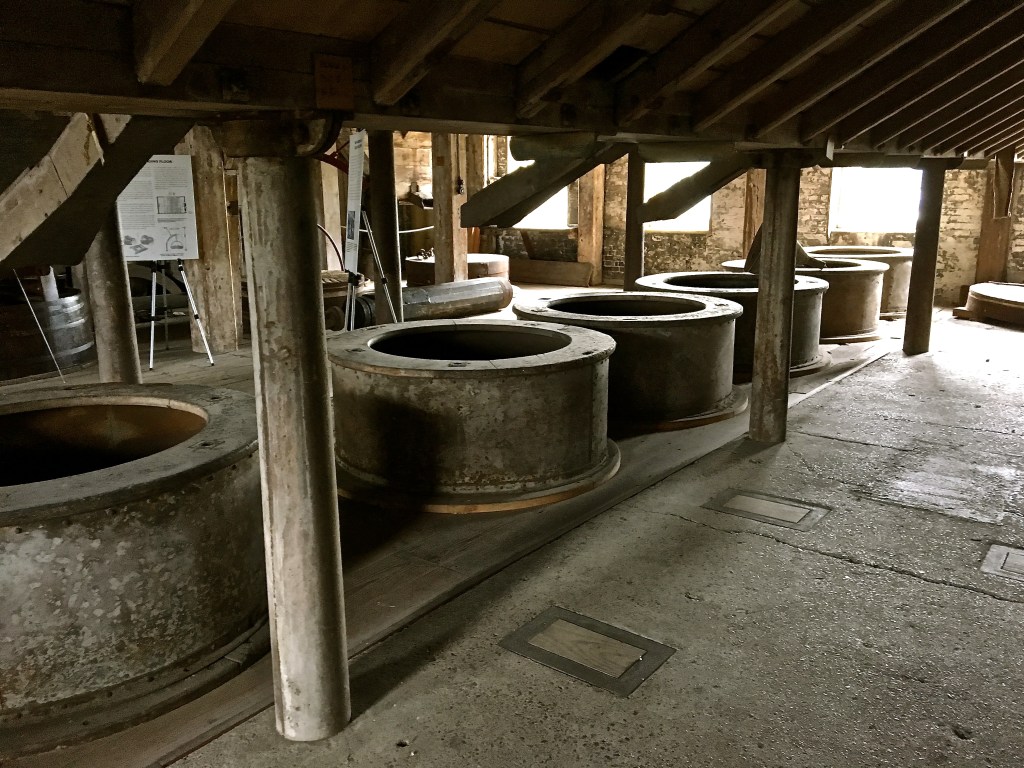
Three Mills / House Mill, River Lea, East London.
This is an ancient mill site, located near the mouth of the tidal river Lea where it joins the river Thames in East London. House Mill is reported to be the ‘largest tidal mill in the world’. It is not working, but is open to the public. Info here
Our interest in Tide Mills was spurred greatly by this passage form the book The Moon: considered as a planet, a world, and a satellite, by James Nasmyth and James Carpenter (1874)
This seems to be a remarkable, early plea to consider tidal power as a source of renewable energy as compared with coal power – which – although abundant and convenient in the late 19th century – was regarded as not renewable.
“In the existing state of civilization and prosperity, we do not, however, utilize the power of the tides nearly to the extent of their capabilities. Our coal mines, rich with “the light of other days”—for coal was long ago declared by Stevenson to be “bottled sunshine”—at present furnish us with so abundant a supply of power-generating material that in our eagerness to use it upon all possible occasions we are losing sight, or putting out of mind, many other valuable prime movers, and amongst them that of the rise and fall of the waters, which can be immediately converted into any form of mechanical power by the aid of tide-mills. Such mills may be found in existence here and there, but for the present they are generally out-rivalled by the steam-engine with all its conveniences and adaptabilities; and hence they have not shared the benefits of that inventive ingenuity which has achieved such wonders of mechanical appliance while steam has been in the ascendant. But it must be remembered that in our extravagant use of coal we are drawing from a bank into which nothing is being paid. We are consuming an exhaustive store, and the time must come when it will be needful to look around in quest of “powers that may be.” Then an impetus may be given to the application of the tides to mechanical purposes as a prime mover. [19] For the people of the British Islands the problem would have an especial importance, viewing the extent of our seaboard and the number of our tidal rivers. The source of motion that offers itself is of almost incalculable extent. There is not merely the onward flowing motion of streams to be utilized, but also the lift of water, which, if small in extent, is stupendous in amount; and within certain limits it matters little to the mechanician whether the “foot-pounds” of work placed at his disposal are in the form of a great mass lifted to a small height or a small mass lifted to a great height. There is no reason either why the utilization of the tides should be confined to rivers. The sea-side might well become the circle of manufacturing industry, and the millions of tons of water lifted several feet twice daily on our shores might be converted, even by schemes already proposed, to furnish the prime movement of thousands of factories. And we must not forget how completely modern science has demonstrated the inter-convertibility of all kinds of force, and thus opened the way for the introduction of systems of transporting power that, in such a state of things as we are for the moment considering, might be of immense benefit. Gravity, for instance, can be converted into electricity; and electricity gives us that wonderful power of transmitting force without transmitting (or even moving) matter, which power we use in the telegraph, where we generate a force at one end of a wire and use it to ring bells or deflect needles at the other end, which may be thousands of miles away. What we do with the slight amount of force needful for telegraphy is capable of being done with any greater amount. A tide-mill might convert its mechanical energy by an electro-magnetic engine, and in the form of electricity its force could be conveyed inland by proper wires and there reconverted back to mechanical or moving power. True, there would be a considerable loss of power, but that power would cost nothing for its first production. Another means ready to hand for transporting power is by compressed air, which has already done good service; another is the system so admirably worked out by Sir W. Armstrong, of transmitting water-power through the agency of an “accumulator,” now so generally used at our Docks and elsewhere, for working cranes and such other uses. And as the whole duty of the engineer is to convert the forces of nature, there is a rich field open for his invention, and upon which he may one day have to enter, in adapting the pulling force of the moon to his fellow man’s mechanical wants through the intermediation of the tides.”
[19] About 100 years ago London was supplied with water chiefly by pumps worked by tidal mills at London Bridge.

 This is in Angle, Dyfed, Wales.







 Tidal Cultures