Tidal flood and ebb are pretty obvious subjects for time lapse filming. Here is another one we have done ourselves! Hope to do more soon.
Time Lapse film of an ebbing spring tide; Tenby Harbour; Pembrokeshire; UK; 12 03 2020
Reply

Tidal flood and ebb are pretty obvious subjects for time lapse filming. Here is another one we have done ourselves! Hope to do more soon.
We have added this to the Tidal Glossary
But it is so interesting we are posting it here too.
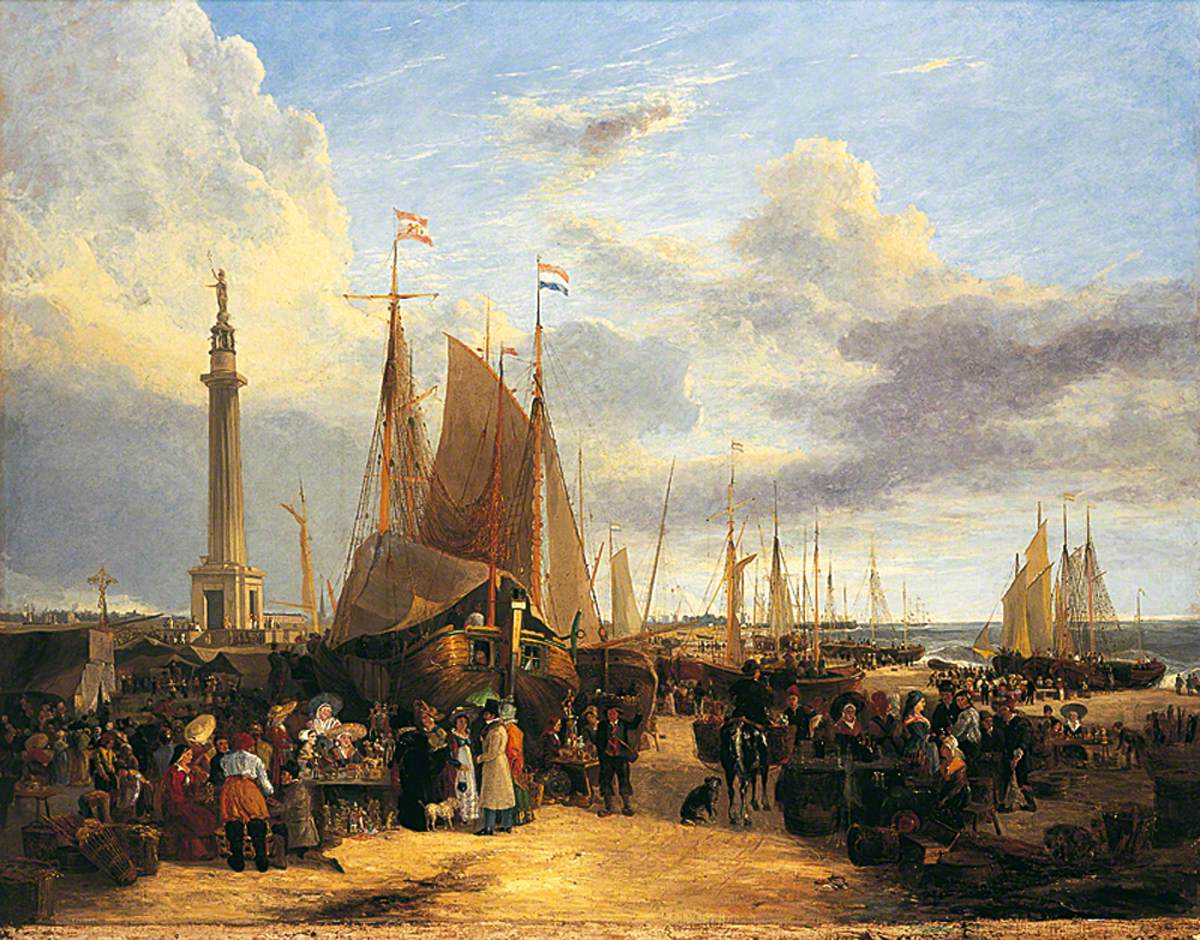
Dutch Fair. A fair, or market, on Great Yarmouth Beach, but we think other places too, where Dutch barges would beach at high tide, sell goods to local shoppers, then set sail again at the next high tide. There is quite a famous painting by George Vincent which can be seen here. From Hugh Aldersey-Williams; Tide: The Science and Law of the Greatest Force on Earth. Another online account describes the scence;
“The “Dutch Fair”, as it is denominated, is held on the beach, and presents an interesting appearance. From twenty to thirty of their falt bottomed boats are run on the shore at high water, and as the tide receded, are left high and dry. Dutch pipes, dried flounders, wooden shoes, apples, and gingerbread, are then offered for sale, and if the weather be fine, the beach is throunged with company, many of whom come from a great distance.”
This is online at the British Library here
The online notes are as follows.
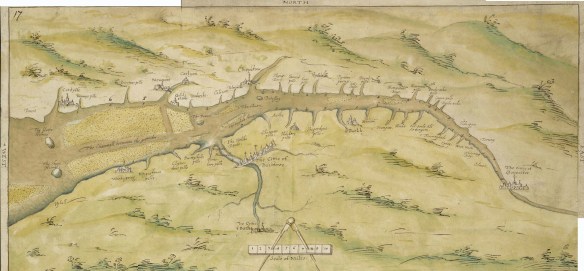
“This is a chart showing the Bristol Channel and the River Severn. Sandbanks in the River Severn are indicated by stippling and the draughtsman has indicated the ‘Channell betweene the groundes’. The tributries of the Severn are indicated and figures along the banks record the distance in miles between their mouths. Locations of note, such as Bristol, Bath and Newport are represented by generalised perspective views of houses and churches. The map is thought to date from 1595, reflecting the fear that the Spanish were planning to invade the Bristol Channel in the 1590’s, rather than initiate a more obvious and direct attack via the English Channel. The Anglo- Spanish relationship had steadily deteriorated since the accession of the Protestant Elizabeth I. Raids on transatlantic shipping by English seamen such as Francis Drake and England’s support of the Protestant rebellion in the Spanish ruled Netherlands had brought tensions with Spain to a crescendo culminating in the events of the Spanish Armada. Although the Spanish Armada was defeated by the English in 1588, England remained at war with Spain for many years and further attempts to invade were made by Philip II. In 1595, the year this chart was produced, the Spanish attacked Mounts Bay, Newlyn and Penzance.”
Strikingly, the huge oxbow bend in the river below Gloucester is not really shown at all. Also all the pills, or smaller tributaries, are shown and named as they would have been much more important, in various ways, in those days.
To see it in detail got to the link above and to the zoom function
See here
This new book has been added to our page of books about tides
Click on image to go to the page
This is another new term to emerge out of the collaborative explorations of the Severn Estuary by Owain (blog owner) and artist-scholar Heather Green. With artist PhD student Laura Denning too on this occasion.
Sea Biscuits. Pieces of clay that are rolled into regular ovates (egg shaped) along the sea floor by the flowing of rising and ebbing tides, which are then left exposed as the tide falls. (The clay mud is sticky and firm enough to resist being dissolved by the sea water).”
((Ovates also seem to be druids of some kind!!))
We like how like how ‘biscuit’ conjures up the action of rolling dough by hand.
We might go and get some and try to bake them hard. And biscuit is also a term for unglazed fired ceramics.
Laura suggested the name sea scat!
This has been added to the page A (poetic) Tidal Glossary on this blog.
In a Facebook comment Stuart Ballard added:
“Stuart Ballard We used to find great fields of almost perfect spheres and cylinders about 4″ diameter near Arlingham when the conditions were right. I think someone tried putting one in a kiln but it just fell apart.”


We stumbled across this tidal curiosity. We guess there were many such tins depicting classic scenes and times of British life – and the ebb tide was one of them. And maybe a reference to retirement, old age – and biscuits!? The drawings are lovely – reminiscent of Delft tiles.


 Tidal Cultures