
So where are the highest tides in the world? (updated 18 12 2025.)
The highest tides in the world are generally understood to be in the Bay of Fundy; Canada. The average spring tidal range is approximately 14.5 metre (47.5 feet), with extreme recordings reaching up to 16.3 metres (53.6 feet).
After that there are a number of other places around the world which also have exceptionally high tides.
One peculiar place in North-West Australia runs the Bay of Fundy close. According to Australian Broadcasting Company Science pages;
“The king of all Australian tides occurs near the town of Derby in King Sound, in north-west Australia, at the end of March and again at the end of April each year. Derby’s tides can reach up to 11.8 m and are the second biggest tides in the world (the largest, clocked at 15 m, occur in the Bay of Fundy, Nova Scotia.” (Source).
So Australia, on the face of it, seems to have the second highest tides. But the tides in the Bristol Channel (Severn Estuary), which at their highest can rise 15 metres, are also routinely claimed to be the second highest tides in the world, and this claim has, in the past, also been made for the tides in Kamchatka, Russia.
Perhaps such claims and counter claims are inevitable because we are talking differences of centimetres here. And, as will be set out, although tides are generally highly predictable – their actual height on any give high tide can vary, and become uncertain, in relation to many effects such as wind direction, atmospheric pressure and other conditions. Also, tides can be measured in different ways, for example mean versus extreme tides. But generally, it makes sense to take the mean (average) in each location. And there is also – it seems – some question around what datum (base line) is being used to determined height data.
This list of the 10 highest tides in the world is adapted from information (from tidal measuring stations) on the The National Ocean Service (US) website here.
1 Canada, Nova Scotia; Bay of Fundy, Burntcoat Head, Minas Basin; 11.70m
2. North-West Australia; Derby; 11.70 m.
3 Canada, Quebec; Ungava Bay, Leaf Lake; 9.75 m.
4 United Kingdom; Severn Estuary; Avonmouth; 9.60 m.
5. Alaska, Cook Inlet Sunrise, Turnagain Arm; 9.23 m.
7. Argentina; Rio Gallegos; Reduccion Beacon; 8.83 m.
8. France; Bay of Saint Mon-Michel; Granville; 8.59 m.
9. Russia, Kamchatka; Cape Astronomicheski; 7.34 m.
10. Channel Islands, Jersey; St Helier; 7.19 m.
I have recently (18 12 2025) asked ChatGPT and Google Gemini ‘where are the ten highest tides in the world?”
The answers are pretty consistent with the above. The same ten places are listed, but in slightly varying orders.
Here is a map. Click on it to jump to a zoomable Google Map.
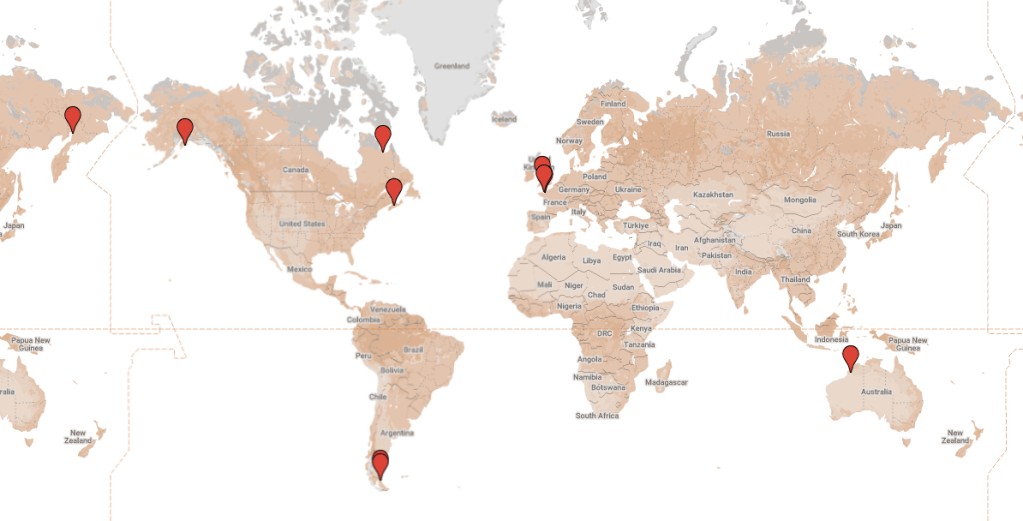
Many of these places are at similar latitudes around the earth, but latitude is not a key factor. The overriding factors are the shape and size of the oceans and the local geographies of the coast, interacting with the forces of the gravitational pull of the moon and sun, and the spin of the earth as these push and pull the waters of the earth around. Most obviously, the highest tides occur where the rising waters of a flood tide are driven into bays and estuaries, or into sharp corners of the coast, thus amplifying the overall tide height.
See also on this blog the key pages:
A Glossary of Tidal Terms, for over 200 tidal terms.
A list of Non-ficton Books About Tides.
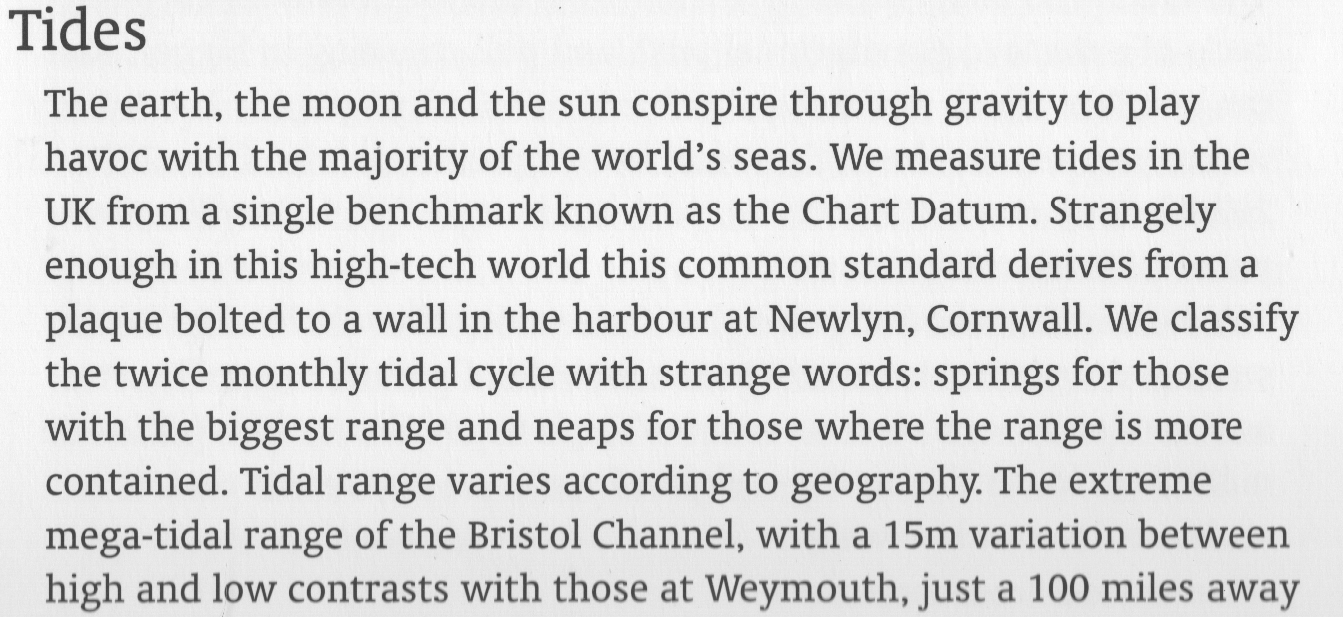
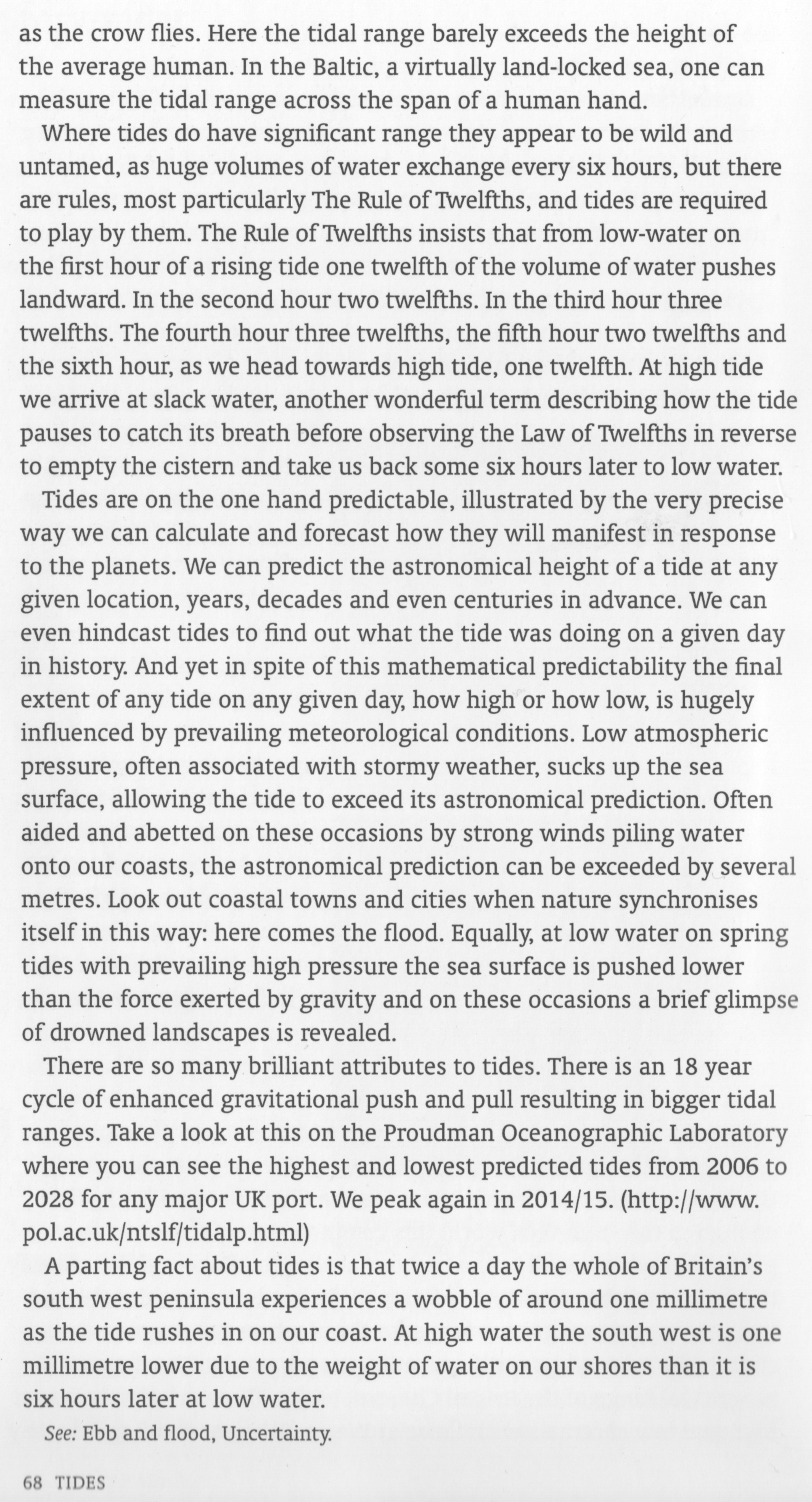
Here is the entry on Tides in the great book Anticipatory History.
Published by Uniformbooks, 2011.
Edited by Caitlin DeSilvey, Simon Naylor and Colin Sacett.
Tides is written by Phil Dyke of the National Trust
Images will elarge on click:

The picture is a link to Amazon
 Tidal Cultures
I was watching a program about the Korean War which said there were 33 foot tides somewhere on the Korean Peninsula, ‘the highest in the world’. I live along the Knik Arm of the Cook Inlet so I know better, but had to check to see if any Korean tides were even on the list. I have seen a couple other examples over the years that shows a lot of people don’t know anything about tides.
Hi thanks – interesting – 33ft is certainly not the highest, and yes it seems to be an example of people saying some or other tide is one of the highest – for dramatic effect.
The river Mersey in Liverpool UK is higher that most of them, your facts are wrong!!
Hi. Thanks. According to the National Oceanography Survey, the highest Tide in Avonmouth between 2008 and 2026 is 14.65 metres. Liverpool is stated to be 10.37 metres. Other places along the Bristol channel are listed as having higher tides that Liverpool. Other places too – like Llandudno. If you want to check this information go to http://www.ntslf.org/tides/hilo. If you have information that shows a differing set of figures I would like to see it and gladly link to it.
Iqaluit NU Canada, our tides get up to 11.9m or 39ft
Iqaluit Canada, Frobisher bay, Nunavut this week Aug 4, 2023 high 11.06m low.39m.
10.67m difference.
Thanks.
Pingback: My List and Map of the Ten highest Tides in the World Has Been Checked Against AI Engines | Tidal Cultures