“Wetlands and streams in 24 states will be threatened if no action is taken.
Restore America’s Estuaries (RAE) is raising urgent concerns about a new rule proposed by the U.S. Environmental Protection Agency (EPA) that would significantly roll back federal protections for wetlands and streams across the country. The proposal follows the 2023 Supreme Court decision in Sackett v. EPA, which overturned decades of established precedent under the Clean Water Act and sharply limited the scope of Waters of the United States (WOTUS).
Currently, 24 out of 50 states rely on federal WOTUS protections for clean water enforcement of wetlands and streams. If this proposed rule becomes finalized, close to 80% of wetlands and over 5 million miles of streams would lose their protected status. Because most watersheds cross multiple state boundaries, this fragmented approach would create inconsistencies, weaken enforcement, and push environmental protections toward the lowest standards within the watershed. Federal policy must play a critical role in ensuring that states don’t export their pollution problems onto other states. History has shown the human and ecological costs savings of prevention are much greater than the costs of remediation.
“Eliminating safeguards for these critical waters puts our communities, coastlines, and ecosystems at extreme risk,” said Daniel Hayden, President and CEO of Restore America’s Estuaries. “Weakening these protections jeopardizes our drinking water quality, billions of dollars in coastal industries such as fisheries, boating, and shipping, as well as endangers critical infrastructure with increased upstream pollution.”
RAE urges federal leaders to reconsider the proposed rule and for Congress to clarify the legislation by restoring strong, science-based protections for wetlands and streams nationwide.” Source here.
About RAE.
Restore America’s Estuaries is dedicated to the protection and restoration of bays and estuaries as essential resources for our nation.
In the summer of 1998 the shifting sands of Holme beach on the north Norfolk coast revealed something extraordinary. Preserved in the sand were the remains of a unique timber circle dating back over 4000 years, to the Early Bronze Age. Although discovered on a modern beach, the circle was originally built on a saltmarsh, some way from the sea. The timbers were arranged in a circle 6.6m (21ft) in diameter, comprising 55 closely-fitted oak posts, each originally up to 3m (10ft) high. The site became known as ‘Seahenge’.”
The timbers were removed from the beach, preserved, and then put on permanent display in King’s Lynn Museum.
A BBC Radio 4 ‘Open Country’ programme about Seahenge is available here.
The programme describes the discovery, the challenges of the archaeology which had to be done between one high tide and the next, the age of the structure, its probable origins, and move to the museum.
This blog is about tidal cultures. These are the amazing natural and cultural ecologies that are shaped and entangled by tidal rise and fall at the margins of the oceans. Tidal cultures are present in all coastal landscapes where tides rise and fall. They are particularly rich in highly dynamic tidal landscapes such as estuaries, where tides can raise the sea level many metres in a matter of hours and then lower it again. Often huge areas of inter-tidal land are repeatedly exposed and then inundated through this process. Tidal cultures are thus cultures of the coast, of where the margin between land and sea is always on the move. Tides are some of the most powerful forces on Earth, and, as well as constantly changing the sea level, create powerful currents and other oceanic processes which also shape ecology, culture and economy. Tides, and therefore tidal cultures, have complex daily, monthly, and seasonal cycles driven mostly by the gravitational relationship between the earth, sun and, most importantly, the moon. Other forces and factors also affect tidal processes and rhythms, such as the spin on the earth, and the varying geomorphology of coasts around the world.
A longer description of my life with tides can be found here.
Research and Writing About Tides, Coasts and Estuaries
I am available for frelance journalism, media comment and research about tides, coasts, estuaries, and tidal cultures in the UK and beyond. Particulalry in the context of climate change and sea level rise which pose huge challenges to coasts, estuaries and wetlands in the UK and around the world in the coming decades. Please email me at owain.oj.jones(at)gmail.com or call / message 07871 572969.
Collaberations
Through my academic work on tides and estuaries, and through this blog, I have been lucky enough to collaborate with a number of artists / scholars on various talks, papers and projects. These people include; Simon Read; Linda Cracknell; Bettina Van Hoven; Louisa Fairclough; Antony Lyons; Davina Kirkpatrick; Natasha Barker; Michela Palmer; and Christoph Potting .
I am currently undertaking a substantial collaboration with Heather Green of Arizona State University on a project entitled Tidal Timespace see here.
BLOG CONTENT
Posts
The blog now consists of over 150 posts which are updates and links to tidal cultural news and points of interest. Pleasse scroll down to browse, or search for any key words you are interested in.
There are 26 pages in all. These contain a lot of varied material including more details of the funded resreach project and the research exchange workhops that were held in the UK and the Netherlands, and various writings by me and others. Please note some pages are grouped and appear in dropdown lists from their parent page.
The main pages of the blog are:
Tidal Glossary. This lists over 150 words and phrases connected to tidal porcesses and places. Many of these are old, local, and/or traditional terms. The glossary leans towards a more poetic that scientific view. There being many technical, scientific terms relating to tides that are not included.
Tidel Related Artworks.This lists over 100 artworks from around the world which are related to tides. This does not include paintings and drawings (there would be many thousands) but lists sculptures, perfomances, films and installations which are inspired by, or connected to, tidal ride and fall in places all around the world. Each entry has a link where possible.
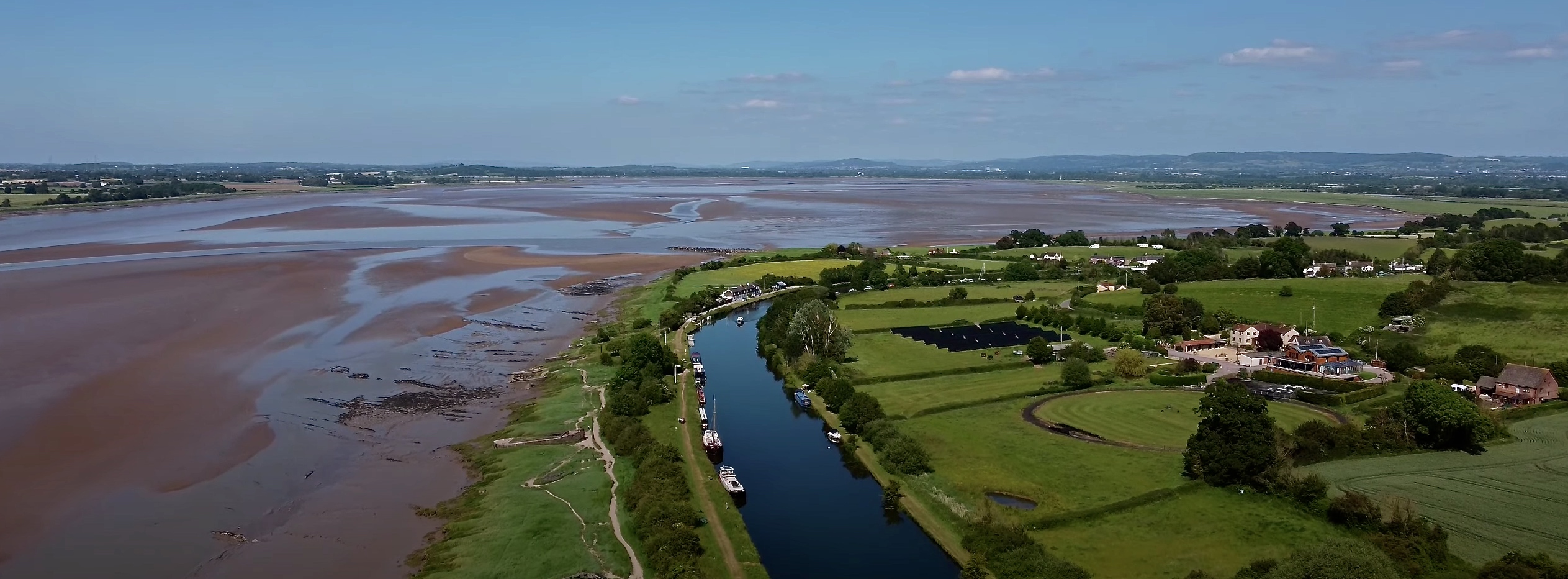
I grew up on a farm near the Severn Estuary (UK). Since then I have lived in places near the estuary all my life. This sparked my interest in tides.
I gained an MSc (Society and Space) and PhD in Cultural Geography at the world leading Department of Geography, University of Bristol; 1993-1997. I then conducted post-doctoral research at Bristol, Exeter, and Open Universities, and other institutions. In series of RCUK (now UKRI) funded projects, I worked upon many aspects of nature-society relations; landscape, place and memory; the environmental crisis; children’s geographies; theories of pragmatism and non-representation. I have conducted research projects on water and society (floods, tides, coastal cultures, water and community; on trees, place and landscape; and children, nature and place. I led a £1.5 million Arts and Humanities Research CouncilConnected Communities project which involves eight UK universities, and numerous community partners and artists in four case study areas across the UK. This project sought to creatively explore and transform connections within and between communities, and communities and nature, in relation to water issues, inclsuing, in the Bristol case study, tides. I was appointed as the first Professor of Environmental Humanities in the UK in 2014 at Bath Spa University where I was deputy director of Research Centre for the Environmental Humanities. (2016 – 2019).
I have published/co-published over eighty scholarly articles. See Academia.edu for a list – many papers can be downloaded.
I have also published five books as a editor and/or co-author.
Pigott, A, Jones, O, Parry, B (Eds.) (2023) Art and Creativity in an Era of Ecocide: Embodiment, performance, practice, London: Bloomsbury.
Holt Y., Martin-Jones D., Jones O. (eds) (2018) Visual Culture in the Northern British Archipelago: Imagining Islands, London: Routledge.
Bastian M., Jones O., Moore N., Roe E. (eds) (2017) Participatory Research in More-than-Human Worlds, London: Routledge.
Jones O., and Garde-Hansen, J. (eds) (2012) Geography and Memory: Identity, Place and Becoming, Basingstoke: Palgrave Macmillan.
Jones O., and Cloke P. (2002) Tree Cultures: The Place of Trees, and Trees in their Place, Oxford: Berg.
“Through an abstraction of flow by numerical indices, the tide is generally perceived as one predictable and regular movement. Yet, tidal predictions are based on an array of various tidal constituents involving astronomical forcing, weather conditions and many other factors, making the tide immensely complex. Behind any tide reading are variegated streams and unexpected patterns (McCully, 2007) that are permanently changing and affected by a complex ensemble, technical and organic, atmospheric and interplanetary. Led by creative practices, this research will analyse the tide as a scientific construct of a predictable and quantifiable pattern (Steinberg, 2001), proposing instead a situated approach towards tidal processes. Using case studies along the Thames, I will develop an understanding of intertidal architecture and how human and non human species collaborate with the tide. I will then develop artworks in the attempt to make the tide differently available and raise awareness.” (Source; UKRI here).
Here iyou can see more about the project and the artist
‘“Between the Tides”. Comparative arts and humanities approaches to living with(in) intertidal landscapes in UK & the Netherlands. Learning from those who live and work with complexity, change and fragility’. 2012 – 2014.
Funded by – The Netherlands Organisation for Scientific Research (NWO) and Arts and Humanities Research Council (AHRC) (UK) Humanities Research Networking and Exchange Scheme.





 Tidal Cultures